
Black Pearl Astrological Significance
- Black Pearl Stone Price
- Black Pearl Astrological Significance Signs
- Black Pearl Astrological Significance Meaning
| Astrology |
|---|
New millennium astrological chart |
| Background |
| Traditions |
| Branches |
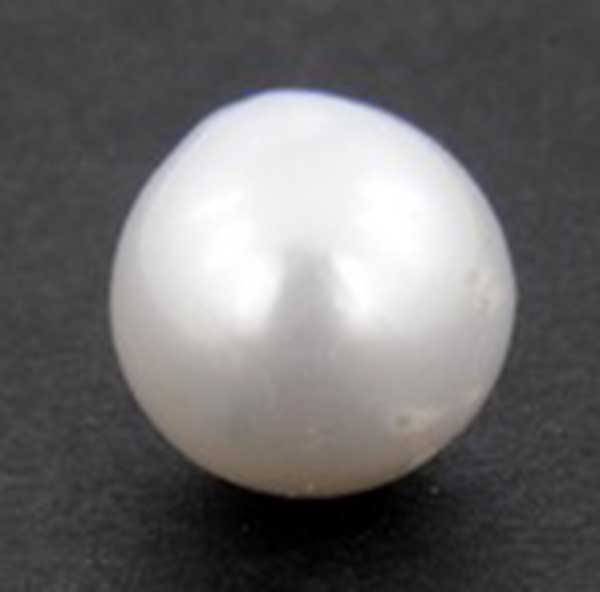
It will teach you to open up and find the meaning and the purpose of your “true self.” They enlighten the mind and inspire the mood, while helping you to learn to love yourself more and, in turn, love others more, as well. Pearl enhances feelings of good will and positive, uplifting feelings. Black Pearls for Black Friday. Whether you believe any of the black pearl legends or not, one thing is for sure: Black pearls are exceptional, and any woman who owns them is fortunate. Black Friday is the perfect time to buy black pearl jewelry for yourself or as a gift for a special someone in your life.
Symbols used in astrology overlap with those used in astronomy because of the historical overlap between the two subjects. Frequently used symbols include signs of the zodiac and for the classical planets. These have their origin in medieval Byzantiny, but in their current form are a product of the European Renaissance. Other symbols for astrological aspects are used in various astrological traditions.
- 2Meanings of the symbols
History and origin[edit]
Symbols for the classical planets, zodiac signs, aspects, lots, and the lunar nodes appear in the medieval Byzantine codices in which many ancient horoscopes were preserved.[1] In the original papyri of these Greek horoscopes, there were found a circle with the glyph representing shine() for the Sun and a crescent for the Moon.[2] The written symbols for Mercury, Venus, Jupiter, and Saturn have been traced to forms found in late Greek papyri.[3] The symbols for Jupiter and Saturn are identified as monograms of the initial letters of the corresponding Greek names, and the symbol for Mercury is a stylized caduceus.[3] A. S. D. Maunder finds antecedents of the planetary symbols in earlier sources, used to represent the gods associated with the classical planets. Bianchini's planisphere, produced in the 2nd century,[4] shows Greek personifications of planetary gods charged with early versions of the planetary symbols: Mercury has a caduceus; Venus has, attached to her necklace, a cord connected to another necklace; Mars, a spear; Jupiter, a staff; Saturn, a scythe; the Sun, a circlet with rays radiating from it; and the Moon, a headdress with a crescent attached.[5] A diagram in Johannes Kamateros' 12th century Compendium of Astrology shows the Sun represented by the circle with a ray, Jupiter by the letter zeta (the initial of Zeus, Jupiter's counterpart in Greek mythology), Mars by a shield crossed by a spear, and the remaining classical planets by symbols resembling the modern ones, without the cross-mark seen in modern versions of the symbols.[5] The modern sun symbol, pictured as a circle with a dot (☉), first appeared in the Renaissance.[2]
Symbols for Uranus and Neptune were created shortly after their discovery. For Uranus, two variant symbols are seen. One symbol, , invented by J. G. Köhler and refined by Bode, was intended to represent the newly discovered metal platinum; since platinum, sometimes confused with white gold, was found by chemists mixed with iron, the symbol for platinum combines the alchemical symbols for iron, ♂, and gold, ☉.[6][7] Another symbol, , was suggested by Lalande in 1784. In a letter to Herschel, Lalande described it as 'un globe surmonté par la première lettre de votre nom' ('a globe surmounted by the first letter of your name').[8] After Neptune was discovered, the Bureau des Longitudes proposed the name Neptune and the familiar trident for the planet's symbol.[9]
The astrological symbols for the first three objects discovered at the beginning of the 19th century —Ceres, Pallas, and Juno—were also created after their discovery. Firstly, they were listed as planets, and half a century later, renamed as Asteroids. Shortly after Giuseppe Piazzi's discovery of Ceres, a group of astronomers ratified the name, proposed by the discoverer, and chose the sickle as a symbol of the planet.[10] The symbol for Pallas, the spear of Pallas Athena, was invented by Baron Franz Xaver von Zach, and introduced in his Monatliche Correspondenz zur Beförderung der Erd- und Himmels-Kunde.[11]Karl Ludwig Harding, who discovered and named Juno, assigned to it the symbol of a scepter topped with a star.[12]
The modern astrological symbol for Vesta was created by Eleanor Bach,[13] who is credited with pioneering the use of the Big Four asteroids with the publication of her Ephemerides of the Asteroids.[14] Bach's symbol for Vesta is a simplified version of other representations of Vesta's altar.[13] The original form of the symbol for Vesta, , was created by German mathematician Carl Friedrich Gauss. Olbers, having previously discovered and named one new planet (as the asteroids were then classified), gave Gauss the honor of naming his newest discovery. Gauss decided to name the planet for the goddess Vesta, and also specified that the symbol should be the altar of the goddess with the sacred fire burning on it.[15][16]
Pluto, like Uranus, has multiple symbols in use. One symbol, a monogram of the letters PL (which could be interpreted to stand for Pluto or for astronomer Percival Lowell), was announced with the name of the new planet by the discoverers on May 1, 1930.[17] Another symbol, which was popularized in Paul Clancy's astrological publications, is based on the symbol for Mercury, with the circle and arc of Mercury trading positions. This symbol is described by Dane Rudhyar as 'suggest[ing] the planetary character of the Pluto mind by the circle, floating above the open cup.' Although, this meaning is readily debatable due to Blavatskian origins, rather than a properly traditional understanding, such as may be found in the hermetic sciences.[18]
The symbol for the centaurChiron, a key with the letter K (for discoverer Charles T. Kowal) was proposed by astrologer Al Morrison, who presented the symbol as 'an inspiration shared amongst Al H. Morrison, Joelle K.D. Mahoney, and Marlene Bassoff.'[19]
The symbol for retrograde motion is ℞, a capital R with a tail stroke.[20][21][22] An R with a tail stroke was used to abbreviate many words beginning with the letter R; in medical prescriptions, it abbreviated the word recipe[23] (from the Latin imperative of recipere 'to take'[24]), and in missals, an R with a tail stroke marked the responses.[23]
Meanings of the symbols[edit]
Astrological planets[edit]
Black Pearl Stone Price
Jaksta media recorder 7 crack. The glyphs of the planets are usually (but not always) broken down into four common elements: A circle denoting spirit, a crescent denoting the mind, a cross denoting practical/physical matter and an arrow denoting action or direction.[25]
| Name | Image | Text | Unicode | Symbol represents |
|---|---|---|---|---|
| Sun | ☉ | U+2609 | Solar symbol (circled dot) | |
| Moon | ☽ | U+263D | A crescent | |
| Mercury | ☿ | U+263F | Mercury's winged helmet and caduceus | |
| Venus | ♀︎ | U+2640 | Hand mirror or necklace (see Venus symbol) (emoji variation is ♀️) | |
| Earth | ⊕ | U+2295 | Earth; a Solar symbol (sun cross) | |
| ♁ | U+2641 | Alternate symbol, a stylized globus cruciger | ||
| Mars | ♂︎ | U+2642 | Mars's shield and spear (emoji variation is ♂️) | |
| Ceres | ⚳ | U+26B3 | Scythe (handle down), emblematic of Ceres as goddess of the Harvest. | |
| Jupiter | ♃ | U+2643 | Jupiter's thunderbolt or eagle | |
| Saturn | ♄ | U+2644 | Saturn's sickle | |
| Uranus | ♅ | U+2645 | H in symbol taken from discoverer's last name, Herschel | |
| ⛢ | U+26E2 | Derived from a combination of the Mars and Sun symbols | ||
| Neptune | ♆ | U+2646 | Neptune's trident | |
| Pluto | ⯓ | U+2BD3 | Pluto's Cap of invisibility (the circle) and a bident (the arc under the circle), also a typical attribute of Pluto. | |
| ♇ | U+2647 | PL monogram for Pluto and Percival Lowell | ||
| ⯔ | U+2BD4 | Variant symbol used mainly by French, Spanish, and Italian speaking astrologers.[26] | ||
| ⯕ | U+2BD5 | Variant symbol invented by German astrologer Hermann Lefeldt in 1946. Used mostly by those that follow the Hamburg School of Astrology.[26] | ||
| ⯖ | U+2BD6 | Variant symbol used mostly used in German-speaking countries and Denmark.[26] |
The Hamburg School of Astrology, also called Uranian Astrology, is a sub-variety of western astrology.[27] It adds eight hypothetical trans-Neptunian planets to the normal ones used by western astrologers:[27]
| Name | Image | Text | Unicode |
|---|---|---|---|
| Cupido | ⯠ | U+2BE0 | |
| Hades | ⯡ | U+2BE1 | |
| Zeus | ⯢ | U+2BE2 | |
| Kronos | ⯣ | U+2BE3 | |
| Apollon | ⯤ | U+2BE4 | |
| Admetos | ⯥ | U+2BE5 | |
| Vulcanus | ⯦ | U+2BE6 | |
| Poseidon | ⯧ | U+2BE7 |
Signs of the zodiac[edit]
| Name | Meaning | Image | Text | Emoji | Unicode | Symbol Represents |
|---|---|---|---|---|---|---|
| Aries | Ram | ♈︎ | ♈️ | U+2648 | Face and horns of ram. Also Ovaries and woman reproductive organ. | |
| Taurus | Bull | ♉︎ | ♉️ | U+2649 | Face and horns of bull. Horned torus. | |
| Gemini | Twins | ♊︎ | ♊️ | U+264A | Companion | |
| Cancer | Crab | ♋︎ | ♋️ | U+264B | Connection to both material and spiritual worlds | |
| Leo | Lion | ♌︎ | ♌️ | U+264C | Circle-Spirit and tail. Cosmic Snake. Sperm. A lion's head and mane. | |
| Virgo | Virgin | ♍︎ | ♍️ | U+264D | Derived from the Greek letters ΠΑΡ, which are the first three letters of the Greek word parthenos, which means 'virgin' | |
| Libra | Scale | ♎︎ | ♎️ | U+264E | Scales | |
| Scorpio | Scorpion | ♏︎ | ♏️ | U+264F | Stinger of a scorpion | |
| Sagittarius | Archer | ♐︎ | ♐️ | U+2650 | Arrow of the centaur, aiming to higher realms | |
| Capricorn[28] | Sea-Goat or Mountain Goat | ♑︎ | ♑️ | U+2651 | Body and head of a goat with the tail of a fish or face and horns of goat. | |
| Aquarius | Waterbearer | ♒︎ | ♒️ | U+2652 | Ripples of water, disruption | |
| Pisces | Fish | ♓︎ | ♓️ | U+2653 | Two fish tied together yet swimming in opposite directions |
Aspects[edit]

In astrology, an aspect is an angle the planets make to each other in the horoscope, also to the ascendant, midheaven, descendant, lower midheaven, and other points of astrological interest. The following symbols are used to note aspect:[29]
| Name | Image | Text | Unicode | Angle | Explanation |
|---|---|---|---|---|---|
| Conjunction | ☌ | U+260C | 0° | Two or more planets in the same sign. A circle with a line implying two objects are in the same place (also, the starting point of an angle) | |
| Vigintile | V | V | U+0056 | 18° | Also known as semidecile. |
| SD | SD | U+0053 U+0044 | |||
| Semisextile | ⚺ | U+26BA | 30° | One sign apart The intersecting lines from the inner angles of the upper half of a hexagon (see Sextile). Also known as dodecile. | |
| Undecile | U | U | U+0055 | 33° | |
| Decile | D | D | U+0044 | 36° | |
| ⊥ | U+22A5 | ||||
| Novile | N | N | U+004E | 40° | Also known as nonile. |
| Semi-square | ∠ | U+2220 | 45° | The bisecting line of a right angle (see Square). Also known as semiquartile and octile. | |
| Septile | S | S | U+0053 | 51° | |
| Sextile | ⚹ | U+26B9 | 60° | Two signs apart The intersecting lines from the inner angles of a hexagon | |
| Quintile | Q | Q | U+0051 | 72° | |
| ⬠ | U+2B20 | ||||
| Binovile | N² | N² | U+004E U+00B2 | 80° | Also known as binonile. |
| Square | □ | U+25A1 | 90° | Three signs apart / Same modality A regular quadrilateral that represents the right angle. Also known as quartile. | |
| Biseptile | S² | S² | U+0053 U+00B2 | 103° | |
| Tredecile | D³ | D³ | U+0044 U+00B3 | 108° | Also known as tridecile. |
| ∓ | U+2213 | ||||
| Trine | △ | U+25B3 | 120° | Four signs apart / Same elemental triplicity An equilateral triangle. Also known as trinovile. | |
| Sesquiquadrate | ⚼ | U+26BC | 135° | The glyph of the Semi-Square under the glyph of the Square, implying the sum of them both. Also known as the sesquisquare, square-and-a-half, and trioctile. | |
| Biquintile | Q² | Q² | U+0051 U+00B2 | 144° | |
| bQ | bQ | U+0062 U+0051 | |||
| ± | U+00B1 | ||||
| Quincunx | ⚻ | U+26BB | 150° | Five signs apart The intersecting lines from the inner angles of the lower half of a hexagon (see Sextile). Also known as the inconjunct. | |
| Triseptile | S³ | S³ | U+0053 U+00B3 | 154° | Also known as tridecile. |
| Quadranovile | N⁴ | N⁴ | U+004E U+2074 | 160° | Also known as quadnovile and quadranonile. |
| Opposition | ☍ | U+260D | 180° | Six signs apart The glyph of the Conjunction plus a circle on top of its line, implying two objects are in front (opposed) of each other. |
In addition to the aspect symbols above, some Russian astrologers use additional or unique aspect symbols:[30][29]
| Name | Image | Text | Unicode | Angle |
|---|---|---|---|---|
| Vigintile | ⯳ | U+2BF3 | 18° | |
| Novile | ⯴ | U+2BF4 | 40° | |
| Quintile | ⯵ | U+2BF5 | 72° | |
| Binovile | ⯶ | U+2BF6 | 80° | |
| Centile (Sentagon) | ⯷ | U+2BF7 | 100° | |
| Tredecile | ⯸ | U+2BF8 | 108° |
Lunar phases[edit]
| Name | Image[31][32] | Text | Emoji | Unicode | Explanation |
|---|---|---|---|---|---|
| New moon | 🌑︎ | 🌑️ | U+1F311 | Denotes the new moon or a soli-lunar arc in the range 0°-45°. | |
| Crescent moon | 🌒︎ | 🌒️ | U+1F312 | Denotes a waxing crescent moon or a soli-lunar arc in the range 45°-90°. | |
| First quarter moon | 🌓︎ | 🌓️ | U+1F313 | Denotes a first quarter moon or a soli-lunar arc in the range 90°-135°. | |
| Gibbous moon | 🌔︎ | 🌔️ | U+1F314 | Denotes a waxing gibbous moon or a soli-lunar arc in the range 135°-180°. | |
| Full moon | 🌕︎ | 🌕️ | U+1F315 | Denotes a full moon or a soli-lunar arc in the range 180°-225°. | |
| Disseminating moon | 🌖︎ | 🌖️ | U+1F316 | Denotes a waning gibbous moon or a soli-lunar arc in the range 225°-270°. | |
| Last quarter moon | 🌗︎ | 🌗️ | U+1F317 | Denotes a last quarter moon or a soli-lunar arc in the range 270°-315°. | |
| Balsamic moon | 🌘︎ | 🌘️ | U+1F318 | Denotes a waning crescent moon or a soli-lunar arc in the range 315°-360°. |
Miscellaneous symbols[edit]
| Category | Name | Image | Text | Unicode | Explanation |
|---|---|---|---|---|---|
| Angle | Ascendant | The ascendant (also known as the 'ascensum coeli') is the rising intersection of the ecliptic with the celestial horizon at a particular moment in time; it is used in the construction of a horoscope/natal chart | |||
| Midheaven | The midheaven (also known as the 'medium coeli') is the point where the ecliptic crosses the local meridian; it is used in the construction of a horoscope/natal chart | ||||
| Apparent retrograde motion | Retrograde motion | ℞ | U+211E | Symbol represents the apparent retrograde motion of a planet in an astrological chart | |
| Asteroid | Astraea[33] | ⯙ | U+2BD9 | ||
| Hygiea | ⚕ | U+2695 | A serpent coiled around Asclepius' rod | ||
| ⯚ | U+2BDA | Two serpents coiled around the rod. (Alternative astrological symbol)[33] | |||
| Juno | ⚵ | U+26B5 | The scepter (of a queen, Juno is the Roman equivalent of Greek Hera) topped with a star | ||
| Pallas | ⚴ | U+26B4 | A spear (variant has triangle on top) Alchemical symbol for sulfur (both variants) see also Asteroids in astrology) | ||
| Vesta | ⚶ | U+26B6 | The fire on the hearth or altar (Roman equivalent of Greek Hestia) | ||
| Centaur | Chiron | ⚷ | U+26B7 | Stylized body of a centaur (the circle is the horse part, the K-like glyph is the human part) | |
| Nessus | ⯜ | U+2BDC | Symbol devised by German astrologer Robert von Heeren in the late 1990s[33] | ||
| Pholus | ⯛ | U+2BDB | Symbol devised by German astrologer Robert von Heeren in the late 1990s[33] | ||
| Comet | Comet | ☄︎ | U+2604 | Different comets often use different symbols, but the use of comets is not widespread in mainstream astrology (emoji variation is ☄️) | |
| Dwarf planet | Eris | An Eye of Providence; proposed by astrologer Zane B. Stein[34] | |||
| ⯰ | U+2BF0 | The Hand of Eris; also used non-astrologically by Discordians[34] | |||
| Apple of Discord[35] | |||||
| In use by astrologers in Poland and by the astrology software Urania[34][36] | |||||
| ⯱ | U+2BF1 | Based on the symbols for Pluto, Mars, and Venus; proposed by Henry Seltzer and used in Time Passages[34][37] | |||
| Haumea | Combination of the Hawaiian petroglyphs for woman and birthchild, as Haumea was the goddess of them.[38] | ||||
| Makemake | Engraved face of the Rapa Nui god Makemake[38] | ||||
| Hypothetical Planet | Proserpina | ⯘ | U+2BD8 | Object and symbol are unrelated to the asteroid 26 Proserpina.[33] | |
| Transpluto[33] | ⯗ | U+2BD7 | |||
| Lot | Lot of fortune | ⊗ | U+2297 | Glyph for planet Earth rotated 45 degrees. | |
| Black Moon Lilith | ⚸ | U+26B8 | The traditional Black Moon Lilith is the position of the mean lunar apogee as measured from the geocenter; variants of the Black Moon include replacing the mean orbit with a 'true' osculating orbit or with an interpolated orbit; charting the empty focus of the Moon's orbit instead of the apogee; and measuring the desired point's barycentric or topocentric position instead of its geocentric position.[39] | ||
| True or Osculating Black Moon Lilith | ⯞ | U+2BDE | Variant used for the calculated (as opposed to mean) position.[33] | ||
| White Moon Selena | ⯝ | U+2BDD | Russian astrologer Pavel Globa invented this to serve as the symbolic opposite of Black Moon Lilith in the 1980s.[33] | ||
| True Light Moon Arta or True White Moon | ⯟ | U+2BDF | Similar to White Moon Selena but using True Black Moon Lilith instead of the traditional Black Moon Lilith.[33] | ||
| Lunar node | Ascending Node | ☊ | U+260A | Not all astrologers use the lunar nodes; however, their usage is very important in Vedic astrology. They are alternately known as the 'Dragon's Head' (Rahu, Caput Draconis, or Anabibazon) and the 'Dragon's Tail' (Ketu, Cauda Draconis, or Catabibazon). The two nodes together are most commonly referred to simply as the nodal axis, the lunar nodes, or the Moon's nodes. | |
| Descending Node | ☋ | U+260B | |||
| Plutino | Ixion | Represents the wheel to which Zeus bound Ixion according to Greek mythology, as a punishment in Tartarus. | |||
| Scattered disk object | Typhon | Simplified representation of a hurricane, as in Greek mythology Typhon was a divine monster that could create hurricanes with his wings | |||
| Small body | Quaoar | Sharp rock art of the Tongva people, in whose mythology it is present the creator god Quaoar, and the letter Q and a canoe.[38] | |||
| Sedna | ⯲ | U+2BF2 | It consists of the symbols of the Inuktitut syllabics for 'sa' and 'n', since in this language Sedna is written as 'Sanna' (ᓴᓐᓇ). Besides, it resembles the shape of a marine animal leaping from the water, in alussion to the myth of Sedna, the Inuit sea goddess.[38] | ||
| Alchemical 'Three primes' | Zodiacal modalities: cardinal | 🜔 | U+263F | Western astrological symbolism has common early origin with alchemical shorthand glyphs, and planetary divination has long been held in association with alchemy's symbols; the three primes of Paracelsus have been associated with the zodiac sign modalities, and tendencies of their nature in an elementary way to be construed as being mutable (Quick-Silver or Mercury), fixed (Salt) or be cardinal (Sulfur). | |
| fixed | 🜔 | U+1F714 | |||
| mutable | ☿ | U+1F70D |
See also[edit]
Black Pearl Astrological Significance Signs
References[edit]
Black Pearl Astrological Significance Meaning
- ^Neugebauer, Otto (1975). A history of ancient mathematical astronomy. pp. 788–789.
- ^ abNeugebauer, Otto; Van Hoesen, H. B. (1987). Greek Horoscopes. pp. 1, 159, 163.
- ^ abJones, Alexander (1999). Astronomical papyri from Oxyrhynchus. pp. 62–63.'It is now possible to trace the medieval symbols for at least four of the five planets to forms that occur in some of the latest papyrus horoscopes ([ P.Oxy. ] 4272, 4274, 4275 [..]). That for Jupiter is an obvious monogram derived from the initial letter of the Greek name. Saturn's has a similar derivation [..] but underwent simplification. The ideal form of Mars' symbol is uncertain, and perhaps not related to the later circle with an arrow through it. Mercury's is a stylized caduceus.'
- ^'Bianchini's planisphere'. Florence, Italy: Istituto e Museo di Storia della Scienza (Institute and Museum of the History of Science). Archived from the original on 2009-10-30. Retrieved 2010-03-17.
- ^ abMaunder, A. S. D. (1934). 'The origin of the symbols of the planets'. The Observatory. 57: 238–247. Bibcode:1934Obs..57.238M.
- ^Bode, J. E. (1784). Von dem neu entdeckten Planeten. pp. 95–96.
- ^Gould, B. A. (1850). Report on the history of the discovery of Neptune. Smithsonian Institution. p. 5.
- ^Francisca Herschel (1917). 'The meaning of the symbol H+o for the planet Uranus'. The Observatory. Bibcode:1917Obs..40.306H.
- ^Gould, B. A. (1850). Report on the history of the discovery of Neptune. Smithsonian Institution. p. 22.
- ^Bode, J. E., ed. (1801). Berliner astronomisches Jahrbuch führ das Jahr 1804. pp. 97–98.
- ^von Zach, Franz Xaver (1802). Monatliche Correspondenz zur Beförderung der Erd- und Himmels-Kunde, Volume 6. pp. 95-96.
- ^von Zach, Franz Xaver (1804). Monatliche Correspondenz zur Beförderung der Erd- und Himmels-Kunde. 10. p. 471.
- ^ ab'Asteroid Symbols'. Retrieved 2010-05-20.
- ^'Memorial for Astrologer, Eleanor Bach'. Archived from the original on 2010-11-30. Retrieved 2010-05-20.
- ^von Zach, Franz Xaver (1807). Monatliche Correspondenz zur Beförderung der Erd- und Himmels-Kunde. 15. p. 507.
- ^Carlini, Francesco (1808). Effemeridi astronomiche di Milano per l'anno 1809.
- ^Slipher, V. M. (1930). 'The Trans-Neptunian planet'. 38: 415.
- ^Rudhyar, Dane (1966). 'PART FIVE: Mercury and Pluto'. The Planets and their Symbols. Retrieved 2010-05-20.
- ^Morrison, Al H. (1977). 'Chiron'. CAO Times. 3: 57.
- ^Randall, Sidney (2006). The ABC of the Old Science of Astrology. p. 14. ISBN978-1-59605-920-7.
..the ℞ with the stroke across the tail stands for Retrograde.
- ^Lilly, William (1659). Christian Astrology. pp. 35, 37. A chart with ℞ by a retrograde Jupiter appears on p. 35; on p. 37, describing the construction of the chart, Lilly says: 'And because [Jupiter] is noted Retrograde I place the letter R, the better to informe my judgement.'
- ^(Booth, Janet (2005). 'Mercury Retrograde'. JanetsPlan-Its.com. Archived from the original on 2010-11-14. Retrieved 2010-10-20.
The symbol for retrograde looks like an ”R” with an “X” going through it, the same as the symbol for a prescription.
- ^ abSmith, Frances Gurney, ed. (1852). 'The Medical Examiner, and record of medical science'. 8: 804.
- ^'Recipe definition'. M-w.com. 2007-04-25. Retrieved 2010-01-22.
- ^'Glyphs of the general astrological and Uranian planets'. Uranian-institute.org. 2001-10-22. Retrieved 2018-03-22.
- ^ abcFaulks, David (2016-08-12). 'L2/16-067R: Astrological Plutos'(PDF).
- ^ abFaulks, David (2016-03-06). 'L2/16-064: Extra Symbols from Uranian Astrology'(PDF).
- ^Behari, Bepin (2003). Myths & Symbols of Vedic Astrology. p. 155.
Of the two emblems related to [Capricorn], one is a horizontal line terminating with a downward moving arc ending with a loop having an extended arc , and the other has a V-shaped beginning whose downward arc convexing to the right .
- ^ abSuignard, Michel (2017-01-24). 'L2/17-020R2: Feedback on Extra Aspect Symbols for Astrology'(PDF).
- ^Faulks, David (2016-06-09). 'L2/16-174R: Extra Aspect Symbols for Astrology'(PDF).
- ^Rudhyar, Dane. 'The Eight Lunation Types', from Your Lunation Birthday.
- ^Meyer, Michael R. 'Key to SymbolsArchived September 23, 2010, at the Wayback Machine', from KhaldeaEphemeris7z, p. 5.
- ^ abcdefghiFaulks, David (2016-05-28). 'L2/16-080: Additional Symbols for Astrology'(PDF).
- ^ abcdStein, Zane. Chiron and Friends - What's Out Past Pluto?
- ^'Chiron and Friends – Eris'. Zanestein.com. Retrieved 2018-03-22.
- ^Bogdan Krusiñski. 'Astrological symbols of planets, zodiac signs and aspects'. Astrologia.pl. Retrieved 2018-03-22.
- ^Seltzer, Henry. Hail Eris!Archived 2010-09-17 at the Wayback Machine
- ^ abcd'Symbols for large trans-Neptunian objects'. Suberic.net. 2013-07-03. Retrieved 2018-03-22.
- ^Revilla, Juan Antonio. 'The Black Moon Apogee and its Variants'. Retrieved 2010-08-20.
External links[edit]
| Wikimedia Commons has media related to Astrological symbols. |
- Glyphs and keywords for asteroids (often different from the astronomical ones)