
When Was My Dell Computer Manufactured
How Old Is My Computer Dell Laptop
While taking notes for my review of Dell’s latest business notebook, I repeatedly found myself saying “Well, on the other hand” The Latitude E7440 is bulky for a 14-inch Ultrabook— it. Is there a way to determine the manufacture date of my Dell Latitude D600 laptop?Maybe from the service code or something. My company will only replace my laptop if it is older than 5 years or it is completely unfunctional. I inherited this laptop from the prevous employee that I replaced so I don't know how long he had it. “ Dell opened plants in Penang, Malaysia in 1995, and in Xiamen, China in 1999. These facilities serve the Asian market and assemble 95% of Dell notebooks. Has invested an estimated $60 million in a new manufacturing unit in Chennai, India, to support the sales.
Fast performance; Responsive keyboard; Powerful audio

Heavy; Bottom can get hot
A powerful business workhorse, the Dell Latitude E5570 pairs fast performance with strong build-quality and a comfortable keyboard.
Review
A business powerhouse, the 15.6-inch Dell Latitude E5570 offers a compelling combination of performance, security and usability. Armed with a 6th Generation Intel Skylake processor and customizable to a high degree (starting at $779, tested at $2,096), the E5570 wowed us with its blazing speed, colorful full-HD touch screen and strong audio. The notebook also feels built-to-last, complete with 180-degree hinges. Our model came with a Core i7-6280HQ processor, 16GB of RAM and a 256GB SSD, which can plow through any workload. We only wish this system were lighter and ran a bit cooler.
See our List of Favorite Laptops
Click on one of our top pick pages below to see which were selected as “Best in Class” by our seasoned tech editors.
Design
A big, matte-black slab, the Latitude E5570 looks like it's ready to get things done. This notebook is also built strong, with carbon fiber reinforcements, a spill-resistant keyboard and an optional scratch-resistant Gorilla Glass touch-screen display ($140). The E5570's speakers are hidden underneath the notebook's front lip, and a 180-degree hinge allows you to bend the lid back until its flat on a table.
My Dell Computer Won't Turn On
Dell says the E5570 has been built to pass the MIL-STD-810G durability tests. That means you can operate this machine at temperatures as high as 140 degrees Fahrenheit and as low as minus 20.2 degrees. The notebook can also be operational while sand and dust are blasted at it for 12 hours, and at heights of up to 15,000 feet.
Two USB 3.0 ports sit on the right side along with an SD memory reader, a headphone jack and a lock port. Ethernet, VGA and HDMI ports live with a third USB 3.0 port and a micro SIM tray on the notebook's backside.
Weighing 5.6 pounds and measuring 0.9 inches thick, the Latitude E5570 is notably heavier than -- but about as thick as -- the HP ZBook 15u G2 (4.23 pounds, 0.84 inches), Toshiba Tecra Z40t-B (3.7 pounds, 0.8 inches) and Lenovo ThinkPad W550s (3.7 pounds, 0.92 inches).
Security
The Latitude E5770 has a number of security and manageability features that IT departments require, including FIPS 140-2 and TCG-certified TPM 1.2 modules (which should be upgradable to TPM 2.0 in the spring). You can buy added security with an optional Smart Card reader ($7) or Smart Card reader with fingerprint reader ($21).
The Latitude's responsive keys have a comfortably deep 2 millimeters of travel.
This notebook also comes with Dell's Data Protection technology, including the company's Security Tools software and Protected Workplace data protection (for which Dell includes a one-year subscription). These tools should help your IT department secure sensitive information, no matter if it's stored locally, in the cloud or on external media.
Keyboard, Touchpad, Touch Screen and Pointing Stick
As I tested out the E5570's keyboard on the 10FastFingers.com Typing Test, I clicked my way past my average of 69 words per minute with 99 percent accuracy to an improved 79 wpm with 99 percent accuracy. The notebook's responsive keys have a comfortably deep 2 millimeters of travel and require 60 grams of force to actuate. We hope to find keys with 1.5mm to 2mm of travel that require at least 60 grams of force.
The E5570's 3.9 x 2.1-inch touchpad provided accurate navigation as I moved around the desktop, while the discrete mouse buttons offered a soft, cushioned feel to each click. The touchpad was also quick to respond to my scroll, zoom and swipe multitouch gestures, without a hint of lag.
Similarly, the notebook's black-and-blue pointing stick provided an excellent way for me to navigate my cursor around the screen, without lifting my fingers off of the home row. The concave nub is soft and has a matrix of 12 rubber dots that make it easy to grip.
Display
The Latitude E5570's optional 1080p touch-screen display offers vibrant colors but only modest brightness. As I watched the 1080p trailer for X-Men: Apocalypse on the Latitude E5570's 1920 x 1080 display, I was impressed by the preview's strong colors and sharp details. Mystique's blue skin looked rich and accurate on the display, and Psylocke's purple blade appeared bright and vibrant as it sliced through a car. The display also did a fine job showing the details of that bisected vehicle, as I noticed the glowing singe marks, tire treads and various pieces of flying debris.
According to our colorimeter, the E5570's display can produce 107.4 percent of the sRGB color spectrum. That's a wider range than you get from the ZBook 15u (103.4 percent), ThinkPad W550S (100.2 percent) and average mainstream notebook (84.9 percent).
The E5570 also earned high marks for color accuracy, earning a score of 0.72 in the Delta-E test (where best scores are closer to zero). That mark beats the ZBook 15u, ThinkPad W550S, notebook average and the Tecra Z40t-B.
Unfortunately, the E5570's display produced only 242 nits of brightness, which is dimmer than the category average (252 nits), as well as the ZBook 15u (307 nits), ThinkPad W550s (312 nits) and the Tecra Z40t-B (265 nits). Despite its modest brightness numbers, the screen offers wide viewing angles, with colors staying true even when we moved up to 70 degrees to the left or right.
If you have a program that appears in the Task Bar but not on any of your screens you likely have one of two problems. Fortunately both are easy to fix. 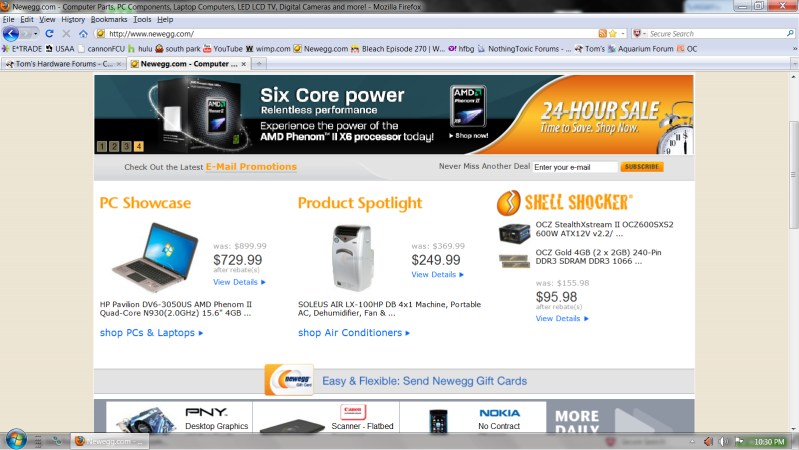
I tested the E5570's 15.6-inch touch-screen panel by doodling erratically in MS Paint; the notebook did a fine job of keeping pace with my fingers and staying accurate to my motions.
Audio
With the MaxxSense audio software presets enabled, the full bass of Kanye West's 'Gorgeous' reverberated with a strong warmth through the Latitude E5570's speakers. The notebook also did a great job handling the rest of the sound spectrum. The myriad of drum cymbals in Future's 'Xanny Family' hit crisply, and the track's high-pitched synths sounded sweet to my ears.
Webcam
The Latitude E5570's 2.0-megapixel webcam captured a fairly attractive and accurate selfie in our office. While the images have some noise, you can clearly pick out details, such as the black-and-white flecks of my sweater. The red Purch wall and my blue shirt both look accurate.
Performance
Our review configuration of the Dell Latitude E5570 packs a 6th Generation Intel Core i7-6280HQ processor, 16GB of RAM and a 256GB SSD hard drive. The E5570 did not lag as I edited a document in Microsoft OneNote, started a round of Candy Crush, used Weather to check the forecast and then started a race in Asphalt 8, all with a dozen tabs open and a video streaming.
The E5570 dominated its competition in the GeekBench 3 benchmark test, which measures overall performance, notching a score of 12,148. That beats the Core i7-5600U-powered Lenovo ThinkPad W550S (6,860) and Toshiba Tecra Z40t-B (6,427), the Core i7-5500U-powered HP ZBook 15u (6,892), and the mainstream laptop average (8,938).
Dell's workhorse handily beat its competitors in our OpenOffice Test, matching 20,000 names to their addresses in 3 minutes and 29 seconds. All of the E5570's competitors took more than 4 minutes.
The notebook's 256GB M.2 SATA SSD hard drive did not impress us as much. It took the Latitude 32 seconds to copy 4.97GB of mixed-media files, resulting in a transfer rate of 159 MBps. That's about the same as the average mainstream notebook (160.5 MBps) and the 512GB SSD in the ThinkPad W550S (159 MBps), but slower than the 256GB SSD in the HP ZBook 15u (175.5 MBps).
Graphics
Our configuration of the Latitude E5570 offers discrete graphics with its AMD Radeon R7 GPU, which gives it more 3D oomph than the typical business laptop has. The system earned a score of 1,593 in the 3DMark Fire Storm benchmark test, which beat the ZBook 15u (1,461), ThinkPad W550S (719) and the Tecra Z40t-B (TK).
Heat
The brawny performance of the E5570 comes at a price, but one that you'll only feel if you use the notebook on your lap. After streaming 15 minutes of full-screen HD video, the notebook's underside spiked to a temperature of 102 degrees Fahrenheit, well above our 95-degree comfort threshold. The touchpad (80 degrees) and keyboard (90 degrees) stayed cool during this test.
Battery Life
Road warriors should be able to get through most of a workday on a charge with the Latitude E5770. The laptop lasted 7 hours and 17 minutes on the Laptop Mag Battery Test (constant Web browsing at 100 nits of brightness), which is longer than the times of the ZBook 15u (6:44) and the average mainstream notebook (5:45). However, the Tecra Z40t-B (8:23) and the ThinkPad W550S (15:52) lasted longer.
Our test unit of the Latitude E5570 came with a six-cell, 87-watt-hour battery, which is available as a customization option on the higher-end versions of the E5570. We highly recommend this $34.30 upgrade from the default three-cell, 47-watt-hour battery.
Configurations
Dell offers the Latitude E5570 in a variety of configurations, and some of them are customizable. The entry-level Dell Latitude E5570 costs $769 and has a dual-core 2.3GHz Core i3 processor, 1376 x 768 nontouch display, 4GB of RAM and a 500GB 7,200rpm hard drive. For $1,169, you can buy the E5570 with a dual-core 2.6GHz Core i7-6600U processor, with the same 1376 x 768 nontouch display, 4GB RAM and 500GB 7,200rpm hard drive. It costs $70 to upgrade to a nontouch 1080p display but a full $210 to get the same resolution with touch.
The review unit of the Dell Latitude E5570 we tested costs $2,096 and offers a quad-core 2.7GHz 6th Generation Core i7-6820HQ processor, a 1080p touch screen, 16GB of RAM, 256GB of SSD storage, a 6-cell 84 watt-hour battery and an AMD Radeon R7 GPU. You can save $140 by opting for a nontouch display, and $105 by moving down from the 256GB drive to its 128GB counterpart.
Some versions of the E5570 have a three-cell, 47-watt-hour battery, which you can upgrade to a four-cell, 62-watt-hour battery for $34.30. Other models start with that four-cell battery, and offer an upgrade to the six-cell, 84-watt-hour battery that our review unit came with, selling for $35.00.
Docking Options
The Latitude E5570 has a proprietary docking connector on its bottom, which lets the notebook snap into Dell's E-Port docks. These range in price from $169 to $219 and offer both charging and a wide range of ports, including DVI, DisplayPort and several USB ports.
Bottom Line
The Latitude E5570 is one of the best 15-inch business notebooks you can buy. Our configuration offered more power than we knew what to do with, along with an excellent keyboard, colorful full-HD display and high-quality audio. We also appreciate the sturdy design and robust security features. Only the relatively heavyweight and warm-running bottom prevent this system from earning an Editors' Choice award. If you want to save some money, you can spend $434 less by opting for 8GB of RAM rather than 16GB, and choosing a dual-core Core i7-6600 CPU rather than the quad-core i7-6820.
If battery life is your priority, we suggest you consider the Lenovo ThinkPad W550S, which lacks a quad-core CPU option but can provide twice as much juice with its optional six-cell, 72-watt-hour battery, and costs $1736 when similarly configured to the Dell. Overall, though, the Latitude E5570 is an excellent business laptop for power users.
Specifications
| CPU | Intel Core i7-6820HQ |
|---|---|
| Operating System | Windows 10 Pro |
| RAM | 16GB |
| RAM Upgradable to | |
| Hard Drive Size | 256GB SSD |
| Hard Drive Speed | |
| Hard Drive Type | M.2 SSD |
| Secondary Hard Drive Size | |
| Secondary Hard Drive Speed | |
| Secondary Hard Drive Type | |
| Display Size | 15.6 |
| Native Resolution | 1920x1080 |
| Optical Drive | |
| Optical Drive Speed | |
| Graphics Card | AMD Radeon R7 M360 |
| Video Memory | |
| Wi-Fi | 802.11ac |
| Wi-Fi Model | Intel DualBand WirelessAC 8260 |
| Bluetooth | Bluetooth 4.1 |
| Mobile Broadband | |
| Touchpad Size | 3.9 x 2.1 inches |
| Ports (excluding USB) | Headphone |
| Ports (excluding USB) | Lock Slot |
| Ports (excluding USB) | VGA |
| Ports (excluding USB) | Ethernet |
| Ports (excluding USB) | HDMI |
| USB Ports | 3 |
| Card Slots | SD memory reader |
| Card Slots | SIM |
| Warranty/Support | 3 Years Hardware Service with In Home/Onsite Service After Remote Diagnosis |
| Size | 14.8 x 9.9 x 0.9 inches |
| Weight | 5.6 pounds |
| Company Website |
That's the number of desktops Dell was trying to produce per hour in the Mort Topfer Manufacturing Center here earlier this month. Put another way, that's roughly 1 PC every 1.5 seconds, 40 a minute, or 23,500 per shift.
The company was initially vague about output figures, but they were written on a whiteboard at the entry to the factory floor. 'I was hoping you wouldn't see that,' laughed Steve Lawton, one of the engineers who helped design the facility and part-time tour guide.
For manufacturing and logistics fanatics (and really, who isn't one?) a tour of the Topfer facility is sort of like visiting Stonehenge or the Flatiron Building. Here is where direct fulfillment, just-in-time production, took flight. It's like safety goggle heaven.
The 300,000-square-foot facility begins to buzz around 8 a.m. and churns solid for a 10-hour shift (12 hours on Friday, Saturday and Sunday). On the ground level, a line of component specialists fill plastic bins with parts--hard drives, processors, memory-- to assemble a PC that has already been ordered.
When filled, the bin then gets shuttled upward by a cage elevator to a web of conveyor belts circulating about 15 feet above the floor. When it hits its destination, another elevator scoots the parts bin down to a cell of PC assemblers.
Although the parts are stuffed into bins in an assembly line fashion, PCs get completed by an individual. 'The highest paid employees are the PC assemblers,' Lawton said. Nonunion employees here start with a salary of about $12 an hour and participate in profit-sharing plans.
Three to five minutes later, PC assembly is complete. The computer returns to the freeway interchange of conveyor belts, where it will next visit an army of barcode scanner-wielding employees who double-check and pack every order and then send it off to logistics and shipping.
From when the parts come into the facility to when a shipping company takes away the box, it's a four- to six-hour process, Lawton estimated.
And everywhere, there are subtle reminders of the tension between management and labor. Company posters exhort employees to follow the five lessons: 'Pick, Pack, Press, Place and Press' and 'Sort, Set, Shine, Standardize and Sustain.' Meanwhile, the 1,600 employees buck cheerleading with 'Smile, Surprise Someone' and tie-dye T-shirts. Safety regulations--such as the 'Weapons are Not Permitted on Dell Property' sign on the front door--are everywhere.
Technically, the Topfer facility isn't where the Dell story started. It only opened four years ago, replacing another facility here that Dell outgrew. The old factory is now an empty shell across town, Lawton said.
Still, the facility is a physical embodiment of the ideas animating the company and why Dell consistently grows far faster than its competitors.

One of the first things that sticks out is that these guys love numbers. Everything at Dell gets honed by mathematics.
The company, for instance, recently redesigned the build table--where PCs get assembled--for greater efficiency. Among the improvements, the new table shaves 20 seconds off the build time, reduces long reaches by 50 percent, and lessens turns (as in an employee turning his or her torso to get a part) by 80 percent, Lawton said. Overall, this should improve costs and cut down on injuries.
The factory schedule also has been tweaked through data feedback. One group of employees works four 10-hour days. The weekend shift works three 12-hour shifts, but gets paid for the full 40 hours. The company finds it more efficient than the traditional five-day schedule. Other fast facts from the factory tour: half the orders come in from the Web site, which is posted in 80 countries and published in 27 dialects.
The numerical obsession comes down from the top. Unlike some other PC companies, many of the executives didn't come out of the engineering or sales departments. Instead, they came from outside consulting firms. CEO Kevin Rollins hails from Bain & Co., as did Paul Bell and John Hamlin, the chief operatives, respectively, for Europe and U.S. consumer business. Chief Marketing Officer Mike George came from McKinsey & Co.
Compared with competitors, Dell probably has a 'disproportionate' number of former consultants, said Stephen Meyer, vice president of marketing for services and another McKinsey alumnus.
Granted, consultants aren't known for their originality--usually it's the opposite--but they certainly know how to drive down costs.
Second, the direct sales model does come with strong, inherent advantages. In a dark office on the second floor of the factory, a team of people assemble a list of components Dell will need for the next two hours of manufacturing, based on incoming orders. The warehouse has one hour and 45 minutes to complete the shopping list and get it to the factory.
Contrary to popular opinion, Dell does not take possession of components when the boxes get put on a forklift in the warehouse. Instead, the components remain the property of the supplier until the forklift crosses a white painted line at the entrance to the manufacturing site. This little meridian eliminates the inventory costs that have plagued others.
'We don't bring in any material to the factory until it has been ordered by the customer,' Lawton said. Control over manufacturing also makes recalls cheaper and lets Dell run product specials on the Web site on some products if other similar items suddenly begin to run short at the warehouse.
A number of Asian companies have rediscovered manufacturing lately too. Samsung asserts that component manufacturing has been one of the keys to its success. 'In Japan, companies are coming back to manufacturing. Now they recognize how important it is to make things,' Akira Yamanaka, corporate vice president of Fujitsu's server group, said in a recent interview.
With Dell announcing another factory in North Carolina soon--and every other U.S. PC maker going the other way--the people in Round Rock will have bigger numbers to play with.
We tested 5G speeds in 13 cities. Here's what we found: Faster speed versus more coverage. That's the most important issue for 5G networks today.
We drowned AirPods, Powerbeats Pro and Galaxy Buds: We sprayed them, dunked them and even put them through the wash to find out which one of these three wireless earphones can handle the most water.